
Work under pressure
What changes when deadlines, uncertainty and workload build up?

Why are capable employees struggling to perform consistently, especially under pressure? Burnout, mental health strain, recurring conflict, low trust, and accelerating change are telling organizations that something deeper needs attention.
IWS helps organizations understand why resilience is being depleted, and measure, map, and build the capacity teams need to thrive in the age of AI.

Select the issue closest to what your organization is experiencing. See what may be contributing to it, and the logical next step.
Sustained demands, inadequate recovery, low control or repeated workplace stressors may reduce resilience capacity. Burnout should be explored alongside the work conditions creating pressure.
These are possible contributing factors, not a diagnosis. A meaningful assessment considers individual and organizational conditions.
Identify workforce-level patterns and conditions that call for organizational action, not only another wellness activity.
Answer three short questions. Receive a practical preliminary direction and learn how IWS can support your organization.
Not a clinical screening or a WIS® assessment. This guide simply helps you determine where to begin.
Receive a useful preliminary direction and explore your next step.
Competent employees may become exhausted, disconnected or hesitant to speak up. Teams may struggle to collaborate, and managers may find themselves repeatedly managing the same difficulties. These patterns deserve more than assumptions about individual motivation.
We examine the interaction between individual resilience, workplace conditions, and the demands of modern work, so support can address what is actually happening.
Explore the challenges →
“What additional workshop or wellbeing activity should we offer?”
“What is repeatedly draining capacity, and what will help people apply their skills under pressure?”
Wellbeing programs and training have value. Their impact is stronger when employees have the capacity and workplace conditions to put learning into practice.
Workplace resilience is shaped by both individual capacity and the environment in which people work. Explore how aggregated information can help guide practical organizational conversations.

Choose a focus to explore a sample visualization of aggregated organizational patterns.
Illustrative values only. This preview does not show live employee, client, or WIS® assessment data.
What changes when deadlines, uncertainty and workload build up?
Where do relationships and communication support or drain capacity?

How do organizations strengthen resilience beyond a single event?
Each step creates the conditions for the next. Start by understanding where pressure is showing up, then translate insight into an actionable and sustainable approach.
Use the WIS® Resilience Index and appropriate workplace assessments to understand resilience capacity across nine dimensions.
Identify aggregated workforce patterns, repeated pressures, strengths and priorities. The Workplace Resilience Audit sits within this stage.
Develop internal resilience capability, including authorized Workplace Resilience Champions, learning and implementation support.
Explore the Workplace Resilience Audit within the Measure and Map pathway, with organizational findings and a practical roadmap.
Explore Workplace Resilience Champion Certification to equip selected, authorized people to sustain resilience practices in the workplace.
Assessment, individualized learning access, aggregated organizational insights, implementation and ongoing support. Personal resilience results remain private.
After employees and teams understand their resilience patterns, the IWS ecosystem brings guided learning, practical tools, and continuing support into the same journey.
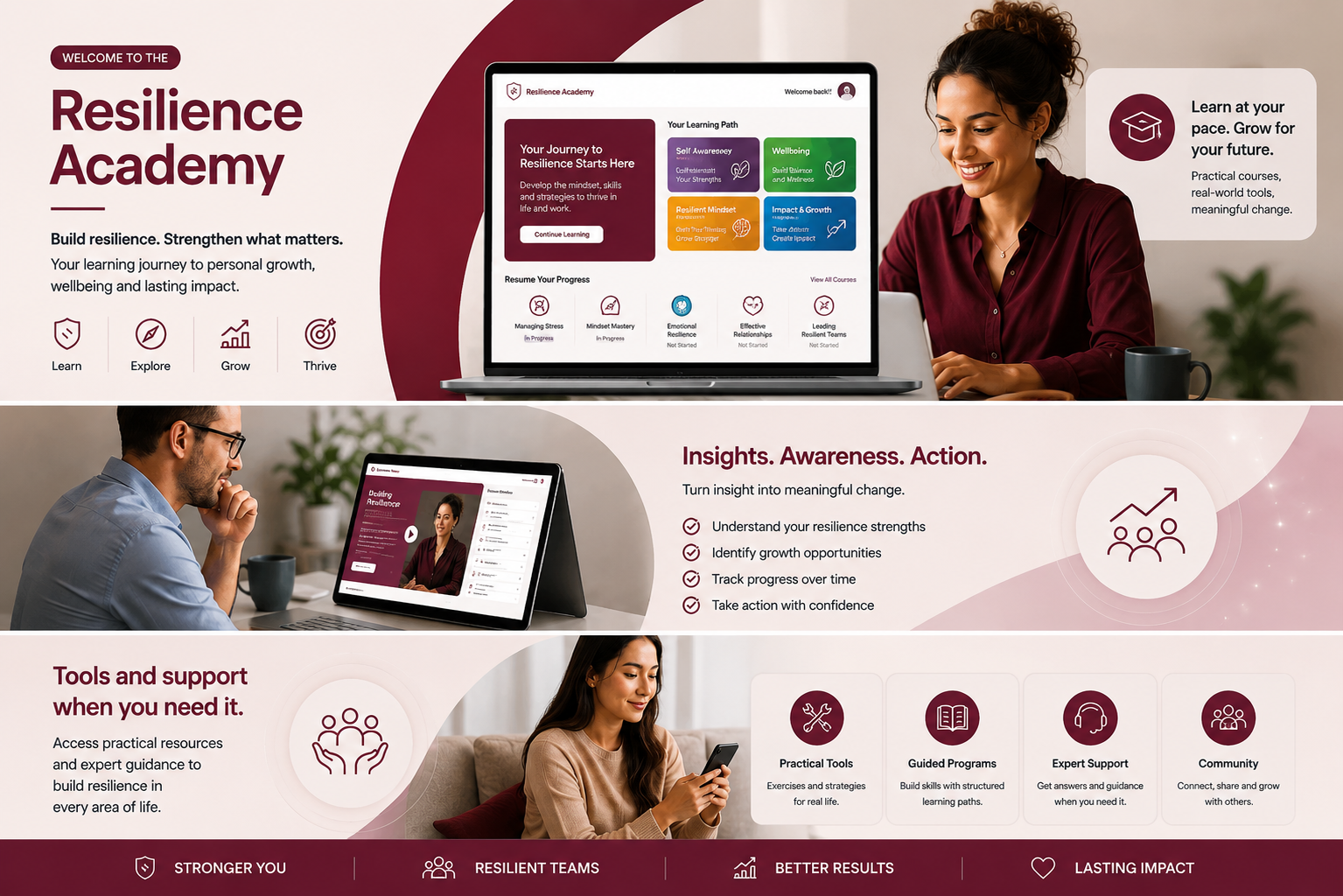
Understanding the problem is only the beginning. IWS helps employees and teams develop a shared language, practical resilience-building habits, and the ability to respond more intentionally when pressure rises. These are the capabilities we work to strengthen.

More confident employees. Better conversations. Greater capacity to adapt as work changes.
Employees can better describe what is draining them, what needs attention, and how to ask for appropriate support.
People learn to identify the resilience anchor currency streams that need strengthening in their lives and work.
Employees become more able to notice their pressures, patterns, reactions, boundaries and recovery needs.
People practise pausing, reflecting, communicating and adjusting their responses before difficulties escalate.
Employees develop practical tools for taking ownership of next steps, reducing avoidable dependence on managers.
Teams build communication, collaboration and adaptability as roles, technologies and expectations change.
These published IWS case studies show how assessment, coaching, leadership development and system design have been applied in real workplaces. They are examples of past engagements, not guarantees of future outcomes.
IWS reports that 125 leaders completed a relational resilience initiative, with improved communication, trust, morale and collaboration between departments.
IWS describes positive behavioural changes following assessment and competency coaching, including stronger workplace relationships and advancement for some participants.
IWS helped design a national conflict-management system, including training for leaders and a train-the-trainer component to support ongoing internal capability.
Previously published feedback from the IWS website.
“The Resilience Audit helped us appreciate the gravity of not making resilience intentional across our workforce.”
VP, People & Culture
View published testimonial ↗“There is a buzz in the workplace since the team completed the WIS®RQ Resilience Experience.”
Leader, Partner Organization
View published testimonial ↗“Joyce has been instrumental in helping us deal with issues of harassment and bullying across the college with leaders and students.”
Eileen, Director of HR · Assiniboine Community College
View published testimonial ↗Quotes and client summaries are reproduced or summarized from the existing IWS website. Experiences vary; outcomes depend on participation, implementation, leadership support and workplace conditions.
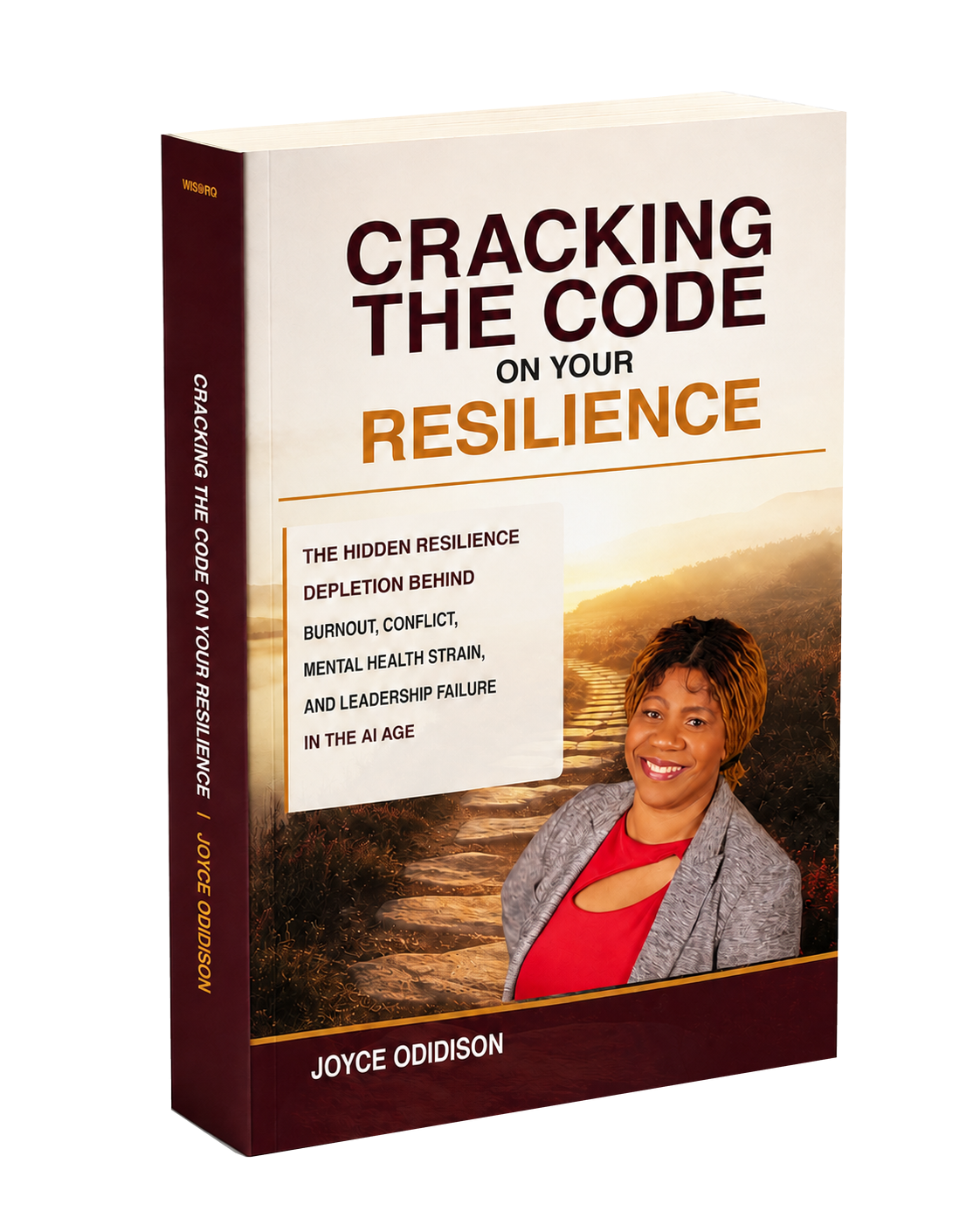
Why do capable people struggle to keep performing under pressure? Joyce Odidison's book Cracking the Code on Your Resilience introduces resilience as a currency that can be spent, depleted, preserved and replenished.
The book provides foundational ideas for the IWS approach. Organizations can use the framework to start more informed conversations and pair learning with meaningful workplace action.
The Currency of Resilience Community gives people a place to continue learning, reflecting and accessing new material between organizational engagements.
Read articles, explore events and webinars, find practical resources, and join conversations that help put resilience learning into everyday practice.
Explore the free community ↗Explore discussions and reflections that help turn insight into action.
Explore community →Read articles about connection, pressure, recovery, and resilience.
Read articles →Discover upcoming conversations and live learning opportunities.
Explore events →Interpersonal Wellness Services Inc. (IWS) is a Canadian certified educational institution supporting organizations through workplace resilience, conflict management, leadership development, and interpersonal wellness.
Led by Joyce Odidison, Conflict Analyst and Master Certified Coach, IWS connects nearly 30 years of workplace experience with a measurable, practical approach. We help organizations understand recurring pressures, strengthen human capacity, and support changes that hold up when demands rise.
Connect with IWS →
Conflict analysis, coaching, and organizational development expertise.
Measurement and reflection across the interconnected areas of life and work.
Appropriately aggregated organizational reporting; personal reports remain private.
Recurring burnout, conflict, and disengagement are difficult to address through guesswork. Start with a clearer understanding of what may be draining capacity, then choose the right next step for your organization.