
Unresolved tension
The issue stays open, and everyone works around it.
Free assessment · Complex workplace conflict
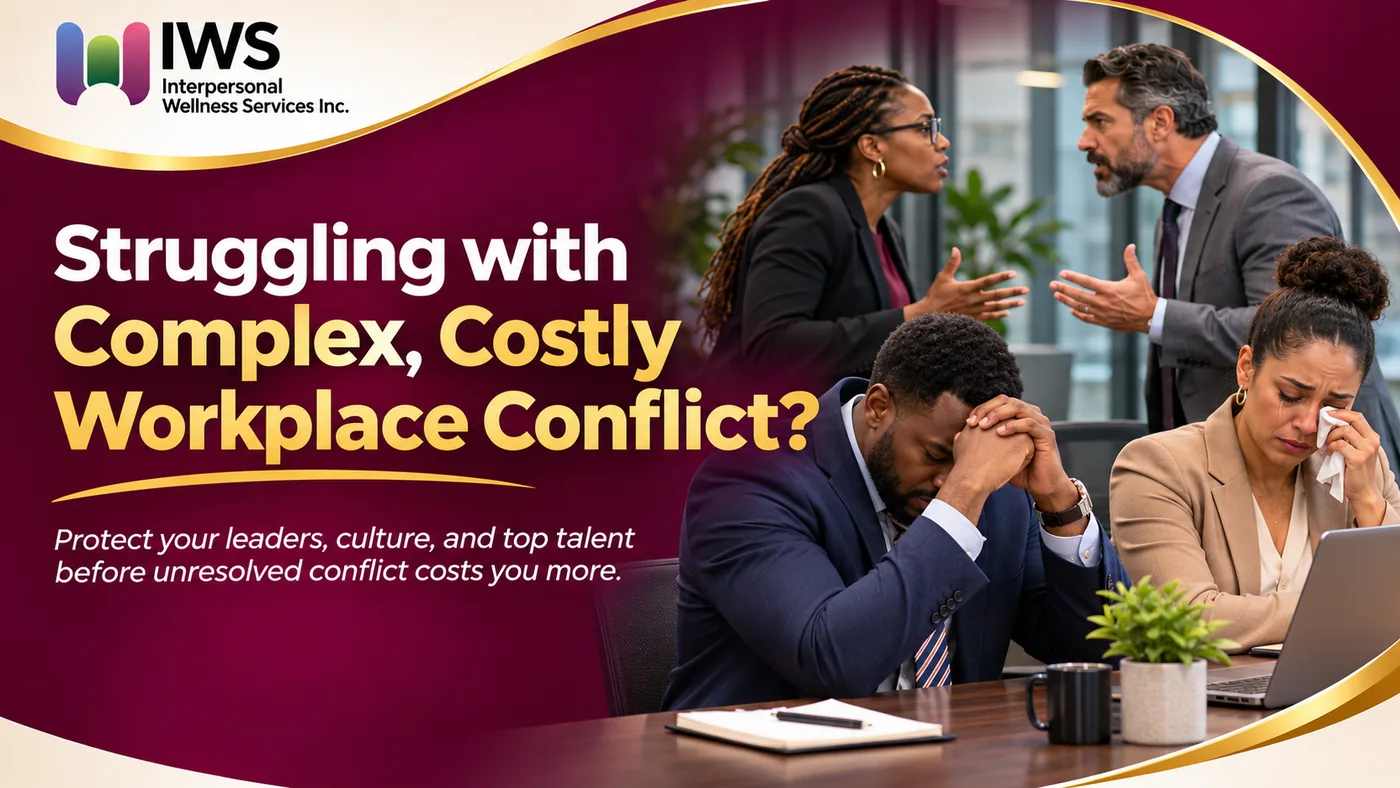
When senior leaders and high-value employees are caught in unresolved conflict, organizations lose trust, talent, institutional knowledge, and momentum.
Is your organization equipped to address it — or allowing it to fester?
No employee names or confidential case details required.
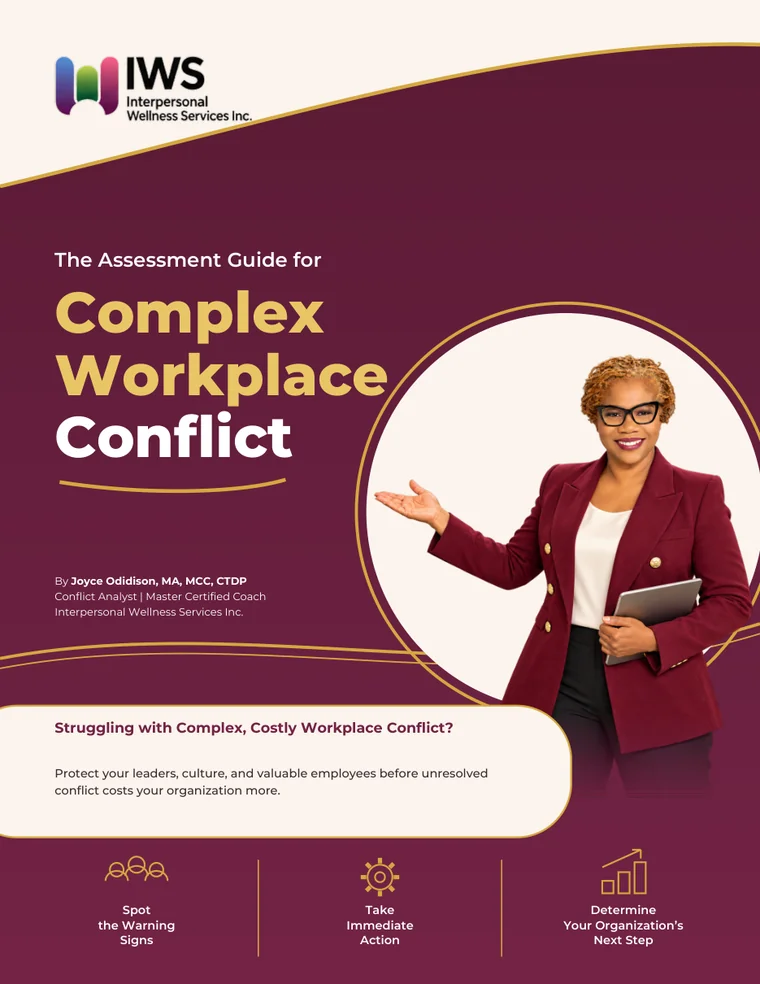
Includes The Assessment Guide for Complex Workplace Conflict
Why it is so hard to resolve
Organizations invest heavily in recruiting, developing and retaining experienced leaders. Yet when conflict develops between senior leaders, managers or valuable employees, even the most capable people can become trapped in unresolved tension, organizational politics and broken trust.
The issue stays open, and everyone works around it.
Power and competing interests crowd out an honest conversation.
People stop believing that raising a concern will change anything.
The real cost to organizations
Warning signs
These are the patterns that tell you conflict is already costing more than it would cost to address it — and they are exactly what the assessment scores.
Take the assessmentDifficult issues remain unresolved because people are afraid to speak up.
Senior leaders or valuable employees have stopped communicating or collaborating effectively.
Power, influence, and competing interests prevent meaningful resolution.
Employees experience prolonged stress, withdrawal, exhaustion, or disengagement.
High-performing employees are considering leaving because they no longer see a workable path forward.
Best practices
Recognize the problem early, and do not allow difficult conflicts to fester under a culture of silence.
Examine the full organizational dynamics by looking beyond personalities to structural barriers, power imbalances, competing interests, and broken trust.
Create psychologically safer conversations by giving people credible opportunities to raise concerns without humiliation, retaliation, or unfair treatment.
Make conflict a pathway to problem-solving by encouraging constructive disagreement, shared accountability, and workable solutions.
Match the intervention to the complexity, recognizing when coaching, mediation, facilitated dialogue, independent assessment, or specialized conflict intervention is appropriate.
Interventions matched to complexity
When the wrong intervention is applied to a complex case, effort is spent and the conflict returns. IWS matches the response to what the situation actually requires.
Free organizational self-check
About 3 minutes · Private · No employee names required
Complex conflict rarely resolves on its own, and it keeps drawing on the resilience of the leaders expected to fix it. This ten-question self-check shows where your organization’s practices support resolution — and where they quietly allow conflict to persist.
About 3 minutes. Your answers stay in this browser until you choose to send them to IWS.
Developed as an educational self-check for organizations. Results are indicative and reflect one respondent’s perception — not a validated diagnostic measure, not an employee assessment, and not a legal opinion.
Inside the free guide
Questions
It measures ten organizational practices that determine whether complex conflict gets resolved or keeps festering — speak-up safety, early intervention, dignity, leadership accountability, power and impartiality, constructive resolution, talent protection and follow-through.
It is written for HR and people leaders, executives, directors and senior managers who can see how conflict is handled across the organization. One senior respondent gives a directional snapshot; several respondents give a more reliable picture.
About three minutes. You receive an instant readiness snapshot with a score for each practice area, practical next steps, and The Assessment Guide for Complex Workplace Conflict as a downloadable and emailed PDF.
No. It is an unvalidated organizational self-check about reported practices. It is not an employee diagnosis, a validated index, or a legal opinion, and no employee names or confidential case details are required.
Next step
Joyce Odidison and the IWS team work with organizations facing complex conflict involving leaders, senior leaders and high-value employees. Request a confidential conversation about appropriate next steps.