
What Is a Resilience Deficit?
A resilience deficit occurs when an individual or team lacks the internal resources, mental, emotional, social, physical, and cognitive, to sustain performance under pressure. It shows up as burnout, conflict, disengagement, poor communication, and declining mental health. Unlike stress, which is situational, a resilience deficit is cumulative. It builds over time across multiple dimensions of well-being, often going unnoticed until it reaches a tipping point.
Get Your Resilience Index Report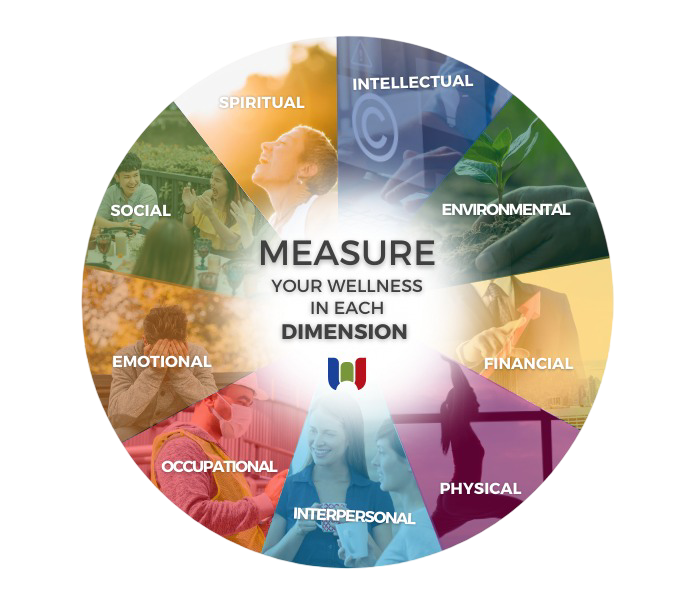
Trusted by leaders in healthcare, education, and industry





















Hidden
Pattern
Most people do not wake up one day in crisis. Burnout, conflict, and disengagement rarely arrive without warning. They build gradually across multiple areas of life and work, long before anyone names the problem.
Resilience deficit is what is happening underneath. It is the slow erosion of capacity that shows up first as low energy, shortened patience, and difficulty concentrating, and eventually becomes the visible problems organizations scramble to fix.
The Nine Dimensions of Resilience
Resilience is not a single resource. It operates across nine interconnected dimensions, each of which can be independently depleted or restored. A person may have strong intellectual resilience but deeply depleted emotional or social resilience, and the depletion in one dimension inevitably affects the others.
When depletion accumulates across multiple dimensions simultaneously, which is common in high-pressure work environments, the compounding effect accelerates the decline. This is why people often describe feeling fine one week and completely overwhelmed the next. The deficit was building. They simply could not see it.
How Resilience Deficit Shows Up at Work
At the individual level, resilience deficit looks like low energy, poor focus, emotional strain, and withdrawal. At the organizational level, those individual deficits compound into systemic problems that HR and leadership teams recognize immediately.
Low morale and disengagement
Employees are not lazy or disloyal, they are depleted. When resilience drops, discretionary effort disappears first. People do the minimum, not because they want to, but because they have nothing left to give.
Rising conflict and poor communication
People with depleted resilience lose the capacity to communicate well. Conversations that should be straightforward become charged. Misunderstandings escalate. Teams fracture.
Burnout and mental health decline
Burnout is not caused by hard work alone. It is caused by sustained depletion across multiple dimensions without restoration. Resilience deficit is the engine driving the burnout epidemic.
Unhealthy coping patterns
When people are depleted and have no framework to understand why, they reach for short-term relief, including substances, avoidance, withdrawal, or dependency patterns that further reduce capacity.
Turnover and absenteeism
By the time an employee leaves or stops showing up, the resilience deficit has been building for months. The resignation is the final symptom, not the beginning of the problem.
Why Traditional Approaches Miss It
Most organizations respond to the visible symptoms of resilience deficit with well-intentioned but surface-level interventions: a stress management workshop, a wellness week, an EAP referral, or a team-building exercise.
These interventions share a common limitation: they do not diagnose the root cause. They are the equivalent of putting a bandage on a wound without asking how the skin broke, how deep the wound is, or whether it requires more than surface treatment.
For 28 years, Joyce Odidison worked as a Conflict Analyst with organizations across government, healthcare, and the private sector. The same pattern appeared everywhere: leaders kept layering on programs and tools, hoping something would stick, while the underlying depletion continued unchecked. That pattern, treating symptoms without measuring the cause, is why resilience deficit persists despite significant investment in employee well-being programs.
| Dimension | EAP / Wellness Programs | WIS® Resilience Platform |
|---|---|---|
| When it activates | After a crisis or complaint | Before crisis, continuously |
| What it measures | Utilization rates | 9 dimensions + 12 Resilience Currencies |
| Individual output | Counselling referral | Personalized Resilience Index Report |
| Team output | Group workshops | Team resilience baseline + risk profile |
| Behaviour change | Voluntary, self-directed | Structured, measurable, under 90 minutes |
| Data for HR | Anonymous utilization only | Aggregated resilience data by team / department |
How to Measure a Resilience Deficit
Resilience deficit becomes manageable the moment it becomes measurable. IWS developed the WIS® Resilience Platform to detect resilience deficits early, before they escalate into costly workplace crises.
Every client journey begins with the Resilience Index Report, a personalized diagnostic that maps depletion across nine dimensions and twelve Resilience Currencies. It identifies exactly where resilience is dropping and by how much, replacing guesswork with diagnostic precision.
This is why employees often say, after going through the assessment: “This is accurate. This is exactly where I’m struggling.”
Not because the system is guessing. But because, often for the first time, people become conscious of what they have been experiencing unconsciously. And that awareness changes everything.
The organizations who have broken the cycle, the Treasury Board of Canada, Government of Manitoba, Manitoba Hydro’s HR team, Manitoba Liquor & Lotteries, Miami University, they stopped asking “what workshop should we run?” and started asking “what is actually happening beneath the surface?”
Questions About Resilience Deficit
Stop Guessing. Start Measuring.
See exactly where resilience is dropping in your organization — and get the diagnostic roadmap to address it. Every client journey starts with the Resilience Index Report.
Get Your Resilience Index Report