Explore
Why Is There So Much Conflict on My Team?
You didn’t hire difficult people.
You hired talented, capable professionals who showed up motivated, who wanted to contribute, who had every intention of doing good work, and somewhere along the way, the tension started. The side conversations. The eye rolls in meetings. The emails that are a little too short, a little too sharp. The people who used to collaborate easily now barely speak to each other unless they have to.
And you’re standing in the middle of it wondering, what happened to this team?
Here’s what I’ve learned after 28 years of walking into teams exactly like yours: the conflict isn’t the problem. The conflict is the signal. It’s telling you something deeper is going on, something your current tools aren’t designed to detect.
It’s Not a People Problem. It’s a System Problem.
When conflict escalates on a team, the first instinct is to look at the individuals. Who started it? Who’s being difficult? Who needs to be coached, corrected, or moved?
Actually, most team conflict isn’t caused by one bad actor. It’s caused by a system that has quietly broken down underneath the surface.
What I see when I work with teams in conflict is a pattern that plays out the same way almost every time. Trust has eroded, but no one can point to the exact moment it happened, and assumptions have replaced conversations. People are watching each other, making up stories about intent, about competence, about who’s pulling their weight and who isn’t. They’ve stopped clarifying and started judging.
The strong personalities push forward, convinced the rest of the team is holding things back. The quieter members withdraw, convinced their contributions don’t matter. Cliques form. The “us vs. them” mentality sets in. Suddenly, your team is spending more energy managing the interpersonal tension than doing the actual work.
This isn’t a personality clash, unfortunately. This is what happens when resilience anchors, the foundational capacities that hold people steady under pressure, have been depleted or were never built in the first place.
The Hidden Causes Leaders Miss
Most leaders are looking at the conflict from the outside. They see the behaviors, the tension, the friction, and they try to address what’s visible. Sadly, the drivers of team conflict are almost always hidden beneath the surface.
Broken trust that no one talks about. Someone felt overlooked. Someone’s idea was dismissed. Someone watched the leader play favorites and decided this team isn’t safe. Trust doesn’t break in one dramatic moment. it erodes in small, unspoken ones, and once it’s gone, every interaction gets filtered through suspicion.
Hope that’s quietly disappeared. When team members stop believing that things can get better, that their contributions matter, that leadership will actually address what’s wrong, so they stop trying. What looks like disengagement or apathy is often a team that’s lost hope, and hopelessness breeds resentment faster than anything else.
Integrity gaps no one can name. People sense when words don’t match actions, when commitments aren’t kept, when the team says one thing in meetings and does another behind closed doors. They may not call it an integrity problem, but they feel it. This fuels the conflict because people stop holding each other accountable in healthy ways and start doing it through frustration, gossip, and passive aggression.
Self-esteem under pressure. When individuals are struggling with their own confidence, when they feel inadequate or threatened, they either over-assert or completely withdraw. Both responses look like conflict on the surface, but underneath, it’s a person trying to protect themselves in an environment that doesn’t feel safe.
These aren’t things you’ll find in an engagement survey, they won’t show up in a team-building exercise, and they definitely won’t resolve themselves with a “let’s all just get along” conversation.
Conflict Is a Business Risk, Not Just an HR Issue
Here’s what many leaders underestimate: unresolved team conflict is one of the most expensive problems in your organization.
It’s not just about morale. It’s about execution. When your team is in conflict, deadlines slip. Quality drops, and your best people start updating their résumés. The ones who stay are operating at a fraction of their capacity because their mental and emotional energy is consumed by the interpersonal dynamics instead of the work.
The Canadian Centre for Occupational Health and Safety estimates that conflict costs organizations thousands per employee per year in lost productivity, absenteeism, and turnover. That’s before you account for the harder-to-measure costs, the loss of institutional knowledge when good people leave, the reputational damage when internal dysfunction leaks into client relationships, the leadership time consumed by managing problems that keep recycling because the root cause was never addressed.
If you’ve ever had to replace a team member because the conflict became unbearable, you know the real cost. Recruitment, onboarding, training, ramp-up time, all because the system was allowed to deteriorate while everyone tried to treat symptoms instead of causes.
Why the Usual Fixes Don’t Work
You’ve probably already tried some version of the standard playbook. Team-building activities. Mediation. One-on-one coaching with the people whom you think are the problem. Maybe a motivational speaker or a communication workshop.
And maybe things got a little better for a week or two, then the same patterns came right back.
Here’s why, most conflict interventions skip the foundation. They try to build collaboration on top of broken trust, depleted hope, and fractured self-esteem. It’s like building a house on sand, it looks good until the first storm, and then it collapses.
You can’t resolve conflict by teaching people to communicate better if they fundamentally don’t trust each other. You can’t create collaboration if individuals on the team have lost the resilience capacity to stay open, honest, and accountable under pressure. The skills training fails because the foundation isn’t there to support it.
What’s missing isn’t better techniques. What’s missing is awareness of where the breakdown actually lives.
What Clarity Actually Looks Like
This is where the 30-Day Team Resilience Mapping changes the conversation entirely.
Instead of guessing where the conflict is coming from, or worse, blaming individuals, we map it. We use the WIS® Resilience Index to give every team member a clear picture of where their resilience anchors stand, things like trust, hope, integrity, self-esteem, purpose, and core values. The assessment takes about 20 minutes, and what it reveals is something no engagement survey or team-building exercise will ever show you.
Each person gets their own Resilience Index report, and many tell us that for the first time, they can see the patterns driving their own frustration, their own assumptions, their own reactions. They get language for things they’ve been feeling but couldn’t articulate. That awareness, that moment of “oh, that’s what’s been happening,” is where the shift begins.
Because as the saying goes,” awareness breeds responsibility, and responsibility breeds action”. John Whitmore
When a team sees its own resilience map, the conversation changes from “who’s the problem” to “where is the system breaking down.” The conflict stops being personal and starts being something the team can actually work on together.
We use an appreciative inquiry process that acknowledges what’s already working, including the wellness activities your organization may already have in place. We’re not here to tear anything down. We’re here to show you which of those efforts are actually translating into resilience capacity and which ones are just activity without impact.
The First Step Is Mapping, Not Fixing
If you’re tired of managing the same conflicts over and over, watching talented people drain each other instead of lifting each other up, and wondering why your team can’t seem to get past the interpersonal noise and just do the work, then it’s time to try something different.
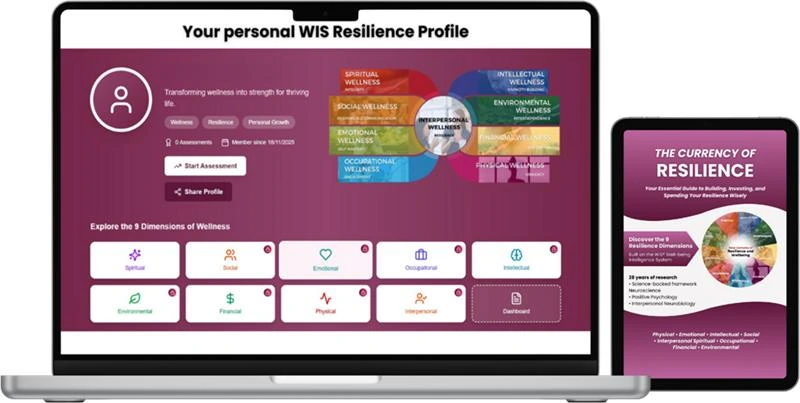
The 30-Day Team Resilience Mapping program gives you the diagnostic clarity to understand what’s really driving the conflict, where the hidden capacity gaps are, and what your team actually needs to move forward.
You don’t need another team-building event. You need a Team Resilience map.
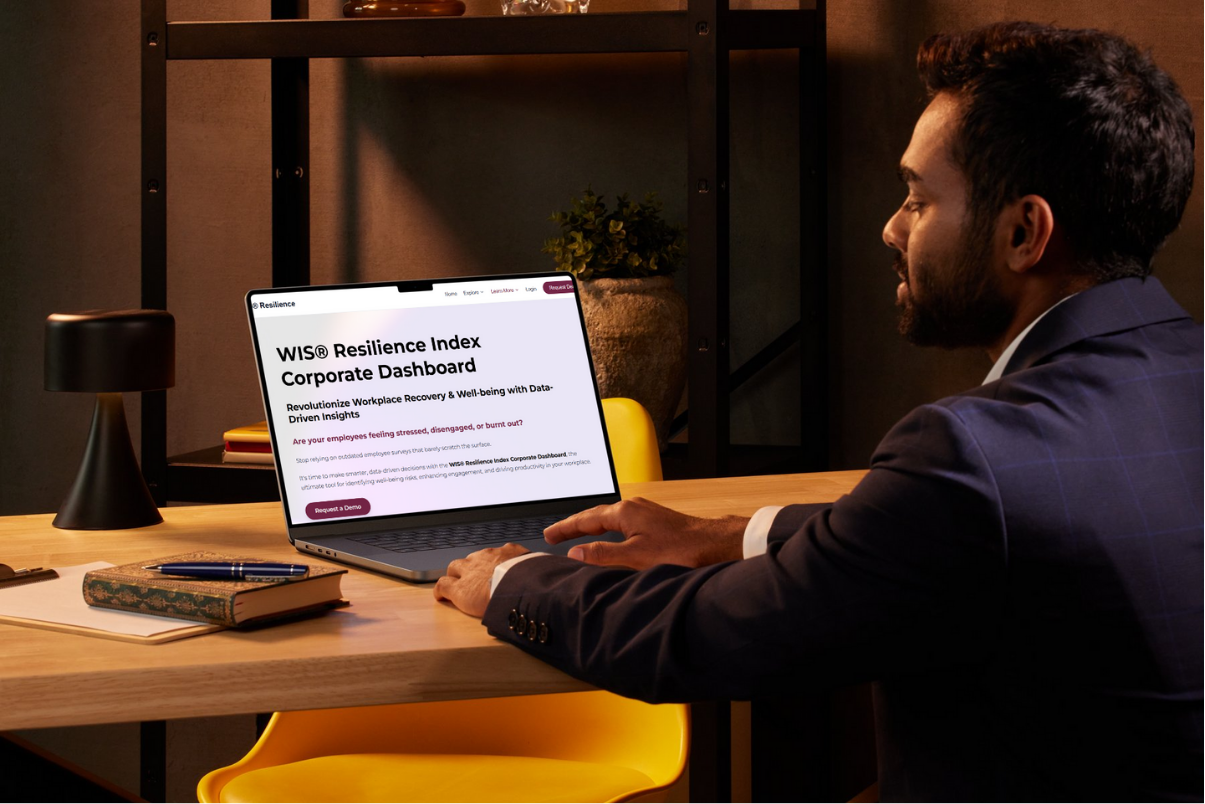
WIS® Resilience Index
Not ready for a team engagement yet?
Join the Currency of Resilience Exchange™, a monthly live coaching call where leaders bring their toughest people challenges and get real-time resilience intelligence they can apply immediately.